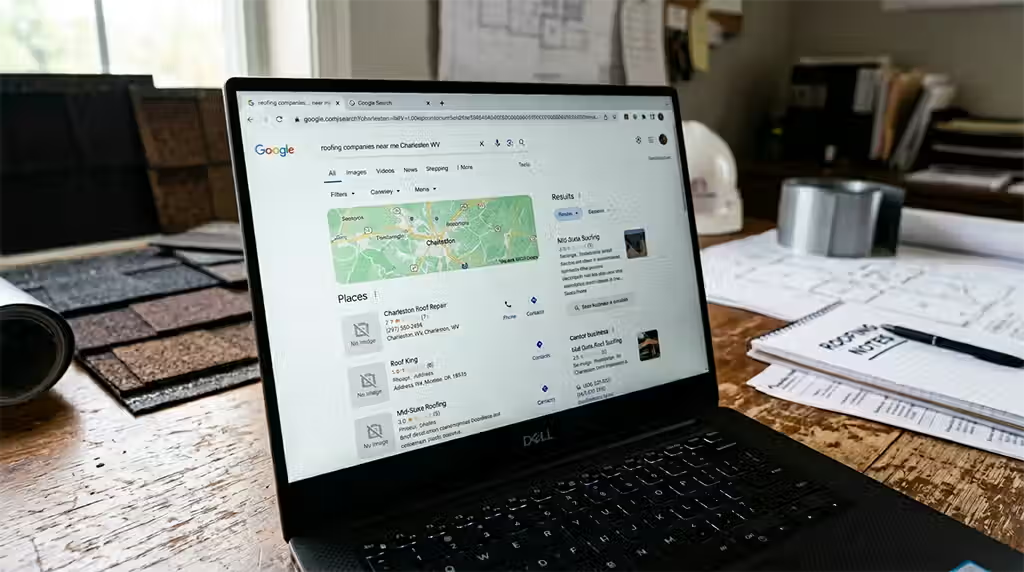
Getting Leads But No Jobs? Here’s What’s Breaking Your Sales (Huntington WV Contractors)
TL;DR: If you’re getting leads but not closing jobs, the problem isn’t lead volume. It’s trust, speed, or clarity. Most contractors in the Huntington area lose deals because their website, messaging, and follow-up don’t support the decision. Fix those first before chasing more leads. If you want to see where you’re losing deals, start with a Free Visibility Report.
If you’re a contractor in Huntington and this sounds familiar:
- you’re getting calls
- you’re getting form fills
- people are reaching out
…but you’re not landing the job
You’re not alone.
And you’re not crazy.
This is one of the most common problems we see.
Most contractors assume:
“I need better leads.”
You don’t.
You need to fix what happens after the lead comes in.
Because right now, something in your process is breaking the deal.
Why am I getting leads but not closing jobs?
Most of the time, it comes down to three things: you’re not building enough trust, you’re not responding fast enough, or you’re not making the decision easy.
That’s it.
Not complicated.
But it’s where most businesses lose.
Let’s walk through it.
Problem 1: You’re not building enough trust
When a homeowner reaches out, they’re not ready to commit yet.
They’re comparing.
They’re looking for reasons to say yes… or no.
And this is where most contractors fall short.
Here’s what we usually see:
- weak or outdated reviews
- no recent project photos
- vague service descriptions
- a website that doesn’t answer real questions
From your side, it feels fine.
From their side, it feels uncertain.
And uncertainty slows decisions.
Or kills them completely.
Your job isn’t just to show up.
Your job is to make the customer feel confident choosing you.
That’s what strong positioning and clear messaging actually do.
Problem 2: You’re responding too slow
Speed matters more than most contractors think.
Here’s what actually happens:
A homeowner reaches out to you.
Then they reach out to 2–3 other contractors.
Whoever responds first, clearly and confidently, usually wins.
Not always.
But most of the time.
Now look at your process:
- missed calls
- delayed responses
- no follow-up
- inconsistent communication
That gap costs you jobs.
Every time.
And it adds up faster than you think.
This is exactly the problem we see over and over.
That’s why we built a system to handle it: https://staging.ancarna.com/ai-workforce/
Because if you don’t fix response time, more leads won’t help.
Problem 3: Your website isn’t helping you close
Most contractor websites don’t help close deals.
They just exist.
Here’s what we mean:
- they don’t clearly explain services
- they don’t show strong proof
- they don’t answer common questions
- they don’t guide the next step
So what happens?
The homeowner leaves your site…
…and keeps looking.
Even if you were a good fit.
That’s the problem.
Your website should support the decision, not slow it down.
That’s how we approach builds: https://staging.ancarna.com/wordpress-websites-hosting/
What most contractors get wrong
They try to fix a conversion problem with more lead flow.
They think:
“If I just get more leads, I’ll be fine.”
No.
If your system is leaking, more leads just means more lost opportunities.
We’ve seen contractors:
- spend more on ads
- get more traffic
- still struggle to close
Because nothing else changed.
That’s the mistake.
What actually works
You don’t need more leads first.
You need a stronger system.
Here’s what works:
- Clear, specific service messaging
- Strong, recent reviews
- Real photos of your work
- A website that answers real questions
- Fast, consistent response to every inquiry
- A simple, clear next step for the customer
None of this is complicated.
But it has to be consistent.
That’s where most businesses fall apart.
What should I fix first?
Start here:
1. Your response time
- answer faster
- follow up consistently
- don’t let leads sit
2. Your trust signals
- get recent reviews
- respond to them
- show real work
3. Your website clarity
- clear services
- clear locations
- clear next step
If those aren’t dialed in, nothing else matters yet.
What this means for contractors in Huntington
If you’re getting leads but not landing jobs, it’s not random.
It’s not bad luck.
It’s a breakdown in:
- trust
- speed
- or clarity
Fix those, and your close rate improves.
Ignore them, and you’ll keep chasing more leads.
That’s an expensive cycle.
Ready to fix it?
If you want to see exactly where your process is breaking:
If you want a clear plan to fix it:
No fluff. No guessing. Just clarity.
Frequently Asked Questions
What are trust signals and why are they important?
Trust signals are elements that help establish credibility and reliability with potential clients. They include recent customer reviews, testimonials, project photos, and clear service descriptions. These signals are crucial because they help alleviate the uncertainty homeowners feel when choosing a contractor. When trust signals are strong, clients are more likely to feel confident in their decision, which can significantly improve your closing rates.
How can I improve my response time to leads?
Improving your response time involves streamlining your communication process. Consider using automated systems to acknowledge inquiries immediately, ensuring no lead goes unanswered. Set specific times throughout the day to check and respond to messages. Additionally, training your team to prioritize lead responses can help maintain consistency. The goal is to respond as quickly as possible, ideally within minutes, to increase your chances of winning the job.
What role does website design play in lead conversion?
Website design is critical for lead conversion as it directly impacts user experience. A well-designed website should clearly present your services, showcase your work, and provide easy navigation. It should also answer common questions and guide visitors toward the next steps, such as contacting you or requesting a quote. A professional, user-friendly website can significantly enhance trust and clarity, making it easier for potential clients to choose you over competitors.
How often should I update my reviews and project photos?
Regularly updating your reviews and project photos is essential for maintaining credibility. Aim to refresh your reviews at least every few months, especially after completing significant projects. Adding new project photos can showcase your latest work and demonstrate your ongoing commitment to quality. This not only helps build trust with potential clients but also keeps your content fresh and relevant, which can positively impact your website’s SEO performance.
What are some effective follow-up strategies for leads?
Effective follow-up strategies include personalized emails, phone calls, and even text messages. After the initial contact, send a thank-you message and provide additional information about your services. Schedule follow-ups at regular intervals, such as one week after the first contact, to check in and see if they have any questions. Consistency and personalization in your follow-ups can help keep you top-of-mind and demonstrate your commitment to customer service.
How can I measure the effectiveness of my lead conversion process?
To measure the effectiveness of your lead conversion process, track key performance indicators (KPIs) such as response time, follow-up rates, and conversion rates. Use tools like CRM software to analyze how many leads convert into jobs and identify any bottlenecks in your process. Regularly reviewing these metrics will help you understand where improvements are needed and allow you to adjust your strategies accordingly for better results.
Why am I getting leads but not closing?
Most of the time, it’s a trust issue, a response issue, or a clarity issue.
Do I need better leads?
Usually not. Most contractors need a better system to handle the leads they already have.
How fast should I respond?
As fast as possible. The first clear response often wins the job.
Does my website affect closing?
Yes. It plays a big role in whether someone chooses you or keeps looking.
What should I fix first?
Start with response time, then trust signals, then your website clarity.